
Portland Local
Exterior Siding That Holds Up to Maine Winters
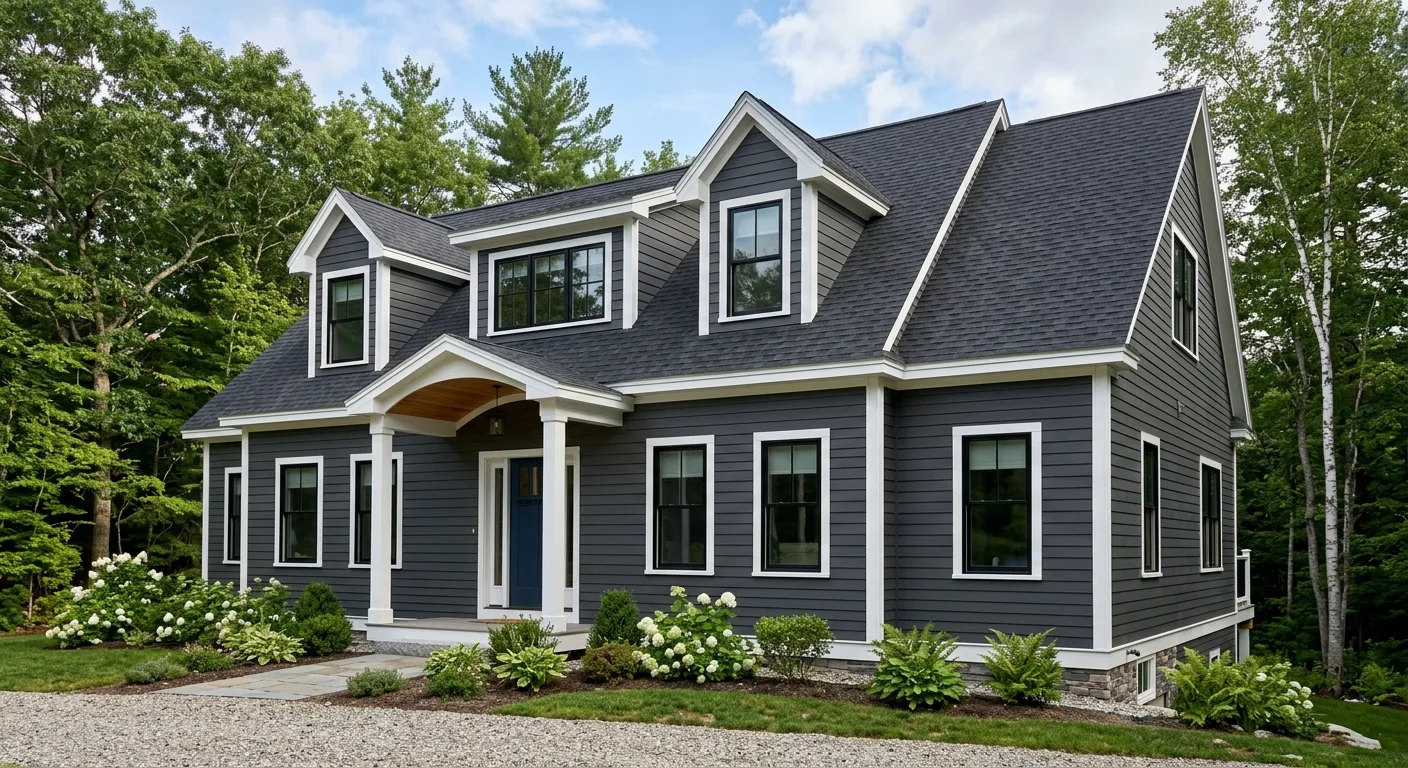
Clapboard, cedar shake, and lap siding installed right the first time by Scotty Woodhouse.
Free estimate
Tell us what you need
Three fields. It reaches a person here, not a call centre.
Exterior Siding for Maine's Toughest Conditions
Exterior siding on a Maine home does more than look good. It's the first line of defense against freeze-thaw cycles, driven rain off the Atlantic, and the kind of sustained cold that finds every gap a careless installer left behind. When we install or replace siding, the goal is a weathertight envelope, not just a new face on the house. Scotty Woodhouse has worked on homes across Greater Cumberland County and knows exactly where Maine siding jobs fail: at the corners, around windows, and anywhere a seam wasn't properly flashed. If your current siding is showing rot, buckling, or persistent moisture intrusion, the problem rarely fixes itself. Call us and we'll tell you honestly what you're dealing with.
Siding cost depends on a handful of variables: the square footage of the wall area, the material you choose, what's underneath (sound sheathing versus rotted boards that need replacement), and how much detail work is involved around windows, doors, and trim. Cedar shake runs higher than vinyl or fiber cement because it takes real skill to install correctly and the material itself costs more. Clapboard, done right, is a classic choice for New England homes and holds paint well when the substrate is prepped properly. We don't cut corners on housewrap, flashing, or nailing patterns, because those are the details that separate a siding job that lasts twenty years from one that starts failing at the seams after two winters. Every job is different -- contact Woodhouse Builders LLC for an accurate estimate.
Siding Materials We Install
The right material depends on your home's architecture, your budget, and how much maintenance you want long-term.
Clapboard Siding
The traditional choice for New England homes. Wood clapboard accepts paint well, looks authentic on older homes, and can last decades when properly primed, installed with correct overlap, and maintained. We won't install it over a compromised substrate.
Cedar Shake Siding
Cedar shake gives a home texture and character you can't fake with a synthetic product. It's a more labor-intensive install, and it rewards the investment when nailing patterns and spacing are correct. Scotty handles cedar shake work on projects across Falmouth, Yarmouth, and the surrounding area.
Fiber Cement Siding
Fiber cement holds paint longer than wood, resists rot and insect damage, and won't warp in the humidity swings Maine sees between July and January. It's a solid option for homeowners who want the clapboard look with less ongoing maintenance.
Lap Siding
Horizontal lap profiles work on a wide range of home styles and are available in multiple materials. We'll walk you through the options and tell you what each one actually requires in terms of upkeep before you choose.
Our Process
How a Siding Job Actually Works
Most homeowners don't know what happens between the quote and the finished wall. Here's the honest sequence.
- 01
Assessment and Substrate Check
Before a single piece of siding goes up, we inspect the sheathing and framing underneath. Rotted boards get replaced. Housewrap gets inspected or installed new. Any flashing around windows, doors, and penetrations gets checked. If the foundation isn't sound, we tell you before the work starts, not after.
- 02
Installation with Correct Detailing
Nailing patterns, overlap dimensions, corner treatments, and trim integration all matter. These aren't optional steps. A siding job that skips proper corner flashing or uses incorrect nail spacing is going to fail at those exact spots, usually within the first few winters. We follow the manufacturer specs and Maine's climate demands.
- 03
Cleanup and Final Walkthrough
We clean up the site before we leave and walk the finished work with you. If something isn't right, we fix it. Scotty isn't a middleman who passes off problems to a sub -- he's the one doing the work and standing behind it.
Why Siding Jobs Fail in New England
- 01
Skipped or Wrong Flashing
Water gets behind siding at transitions: where siding meets a window, a door, a roofline, or a penetration. Without proper step flashing and kick-out flashing, that water channels into the wall cavity and rots the framing. By the time you see a stain on the interior, the damage is already extensive.
- 02
Installing Over Rotted Substrate
New siding over rotted sheathing is a short-term cosmetic fix that fails fast. The nails won't hold, moisture continues to migrate, and the rot spreads under the new material. We've seen siding jobs that looked fine at install and were failing within eighteen months because the wall behind them was already compromised.
- 03
Incorrect Nail Depth and Spacing
Overdriven nails crack the material and create stress points. Underdriven nails let siding shift in wind. Neither failure is obvious on day one, but both become visible after a season or two of thermal expansion and contraction. Proper nailing isn't fast -- it's the kind of detail that separates a craftsman from someone moving as quickly as possible.
Full-Scope Work on Home Improvements
Siding Questions We Actually Hear
What is exterior siding and what does it actually do structurally?
How much does siding cost for a 2,000 square foot house?
How do I know if my current siding needs full replacement or just repair?
Does new siding need to be painted or primed before installation?
Can new siding be installed directly over the old siding?
How long does a siding job take from start to finish?
Does new siding need to be back-primed before installation?
How long does a siding replacement job take?
Ready to Stop Patching and Start Over Right?
Scotty Woodhouse works throughout Greater Cumberland County and responds seven days a week.