
Portland Local
Flooring Installation That Holds Up for Decades
Scotty Woodhouse installs hardwood, tile, and more, available 24/7 across Greater Cumberland County.
Free estimate
Tell us what you need
Three fields. It reaches a person here, not a call centre.
Flooring Installation Done to Last
The average cost to lay new flooring is one of the most searched questions homeowners type before picking up the phone, and the honest answer is that it depends entirely on the material, the subfloor condition, and the square footage involved. What we can tell you is that a poor installation will fail regardless of how expensive the floor is. Gaps, cupping, hollow spots under tile, boards that squeak after six months. Those aren't material problems. They're installation problems. Woodhouse Builders handles flooring installation from prep to finish, and we don't cut corners on the subfloor work that nobody ever sees but everybody eventually feels.
Flooring scope and cost swing wide depending on what you're working with. A straightforward hardwood install in a clean, level room is a very different job from tearing out old carpet, finding a subfloor with moisture damage underneath, and laying tile in a bathroom with three angles and a floor drain. Material choice matters too, engineered hardwood, solid hardwood, porcelain tile, and luxury vinyl all have different acclimation requirements, fastening methods, and failure points if rushed. Cost drivers include square footage, room configuration, subfloor condition, material selection, and whether existing flooring needs to come out first. Every job is different, contact Woodhouse Builders LLC for an accurate estimate.
Flooring Materials We Install
Different floors fail for different reasons. We know the installation method each material actually requires.
Hardwood Flooring
Solid and engineered hardwood both require proper acclimation before installation, skipping that step is the reason so many floors cup or gap within the first year. We nail down solid hardwood to the subfloor properly and handle the expansion gaps at every wall and threshold.
Tile Flooring
Tile installation lives or dies on the substrate underneath it. A flex in the subfloor means cracked grout lines inside a year. We check deflection before we set a single tile, and we back-butter every piece on jobs where full adhesion matters.
Luxury Vinyl Plank
LVP is durable and forgiving of moisture, but it's not foolproof. A subfloor with humps or dips over an eighth of an inch will telegraph right through a floating floor. We flatten before we float, and we don't skip the transitions.
Laminate
Laminate expands and contracts with temperature changes, which means the expansion gap at the perimeter isn't optional. We install it correctly and handle the baseboard and shoe molding so the finished room looks intentional, not patched.
How It Works
From Subfloor to Final Finish
Three stages, done in order. Rushing any of them is how you end up calling another contractor two years later.
- 01
Assess and Prep
We start with the subfloor, checking for level, flex, moisture, and existing damage. Any of those conditions ignored at the start will show up in the finished floor. We don't skip this step.
- 02
Install the Floor
Material is acclimated to the room before it goes down. Fastening method, adhesive type, and layout pattern are chosen based on the specific floor and the specific room, not a one-size approach.
- 03
Trim and Finish
Baseboards, shoe molding, thresholds, and transitions are the details that separate a finished installation from one that looks like the crew left in a hurry. We handle all of it.
What to Know
Do Installers Remove Baseboards?
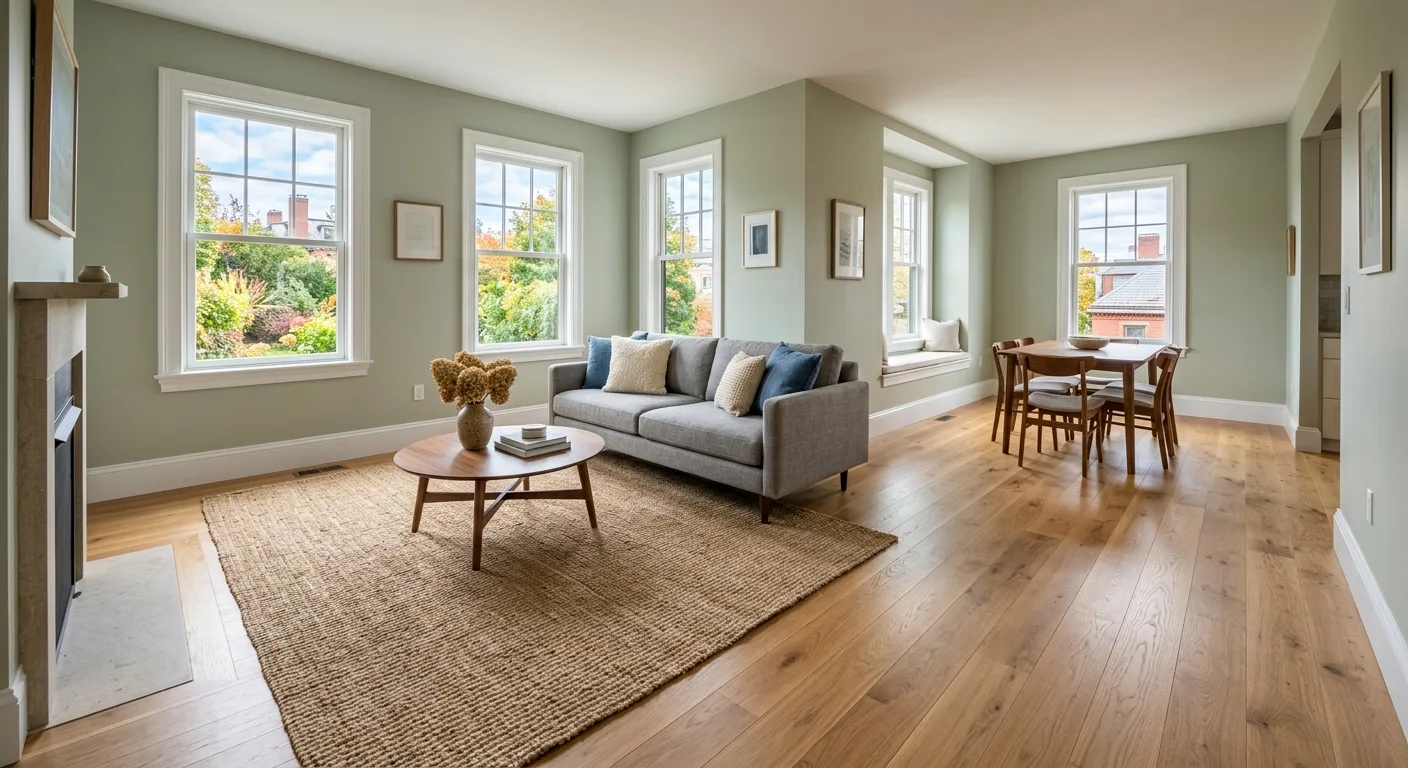
What Separates a Good Floor from a Failed One
- 01
Subfloor Condition
Soft spots, delamination, moisture damage, or too much deflection in the joists below, any of these will ruin the floor above it, regardless of material. We identify and address subfloor issues before installation starts.
- 02
Acclimation
Wood-based flooring needs time to adjust to the temperature and humidity of the room it's going into. Installing it straight off the truck is a shortcut that costs the homeowner a floor that moves, buckles, or gaps inside the first season.
- 03
Expansion Gaps
Wood and wood-based products move with humidity. The gap at the perimeter isn't a mistake. It's required. Installers who skip it produce floors that buckle in summer. We follow the manufacturer specs and cover the gap with trim that's actually attached to the wall, not to the floor.
Areas We Cover for Flooring Work
Woodhouse Builders installs flooring throughout Greater Cumberland County and the surrounding region. We work in older homes with uneven subfloors and in new construction alike.
Flooring Installation: Common Questions
What is the average cost to lay flooring?
How much does it cost to floor a 1,000-square-foot space?
Do flooring installers remove baseboards?
How long does wood flooring need to acclimate before installation?
Can you install flooring over an existing floor?
What happens if the subfloor has moisture damage?
Ready to Replace Your Floors?
Call Scotty directly. We're available 24/7 and we'll give you a straight answer on what your project actually involves.